
E.S.G. is not just G.D.P.R. and ISO 14000
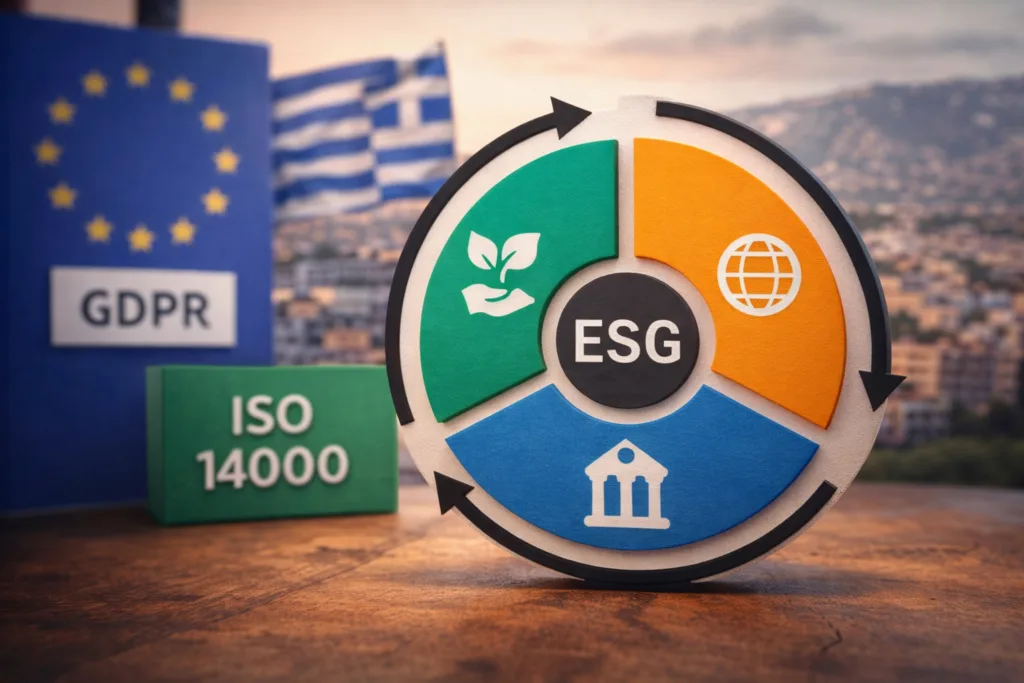
Over the last 5 years, ESG compliance has become imperative for all Greek industries. As it rushes to meet the Environmental, Social, and Corporate Governance (ESG) requirements that are becoming increasingly important in today’s business environment, Greek industry is facing an array of challenges. These requirements are designed to promote sustainable practices and social responsibility while ensuring that businesses operate with a high level of transparency and accountability. Based on a company’s performance in these areas, investors, stakeholders, and other interested parties can evaluate a company’s ESG practices. Tenths if not hundreds of ESG rating providers over the world (such as Sustainalytics ESG Risk Ratings, Dow Jones Sustainability Index, the Global Reporting Initiative (GRI) etc.) evaluate companies’ exposure to ESG risks, such as climate change, human rights, and corporate governance, providing ratings that help companies not only manage risks and meet regulatory requirements but also enhance their brand reputation and create long-term value for stakeholders. The need for the implementation of ESG policies is above all substantive for several reasons: What is more, by prioritizing ESG practices, companies can position themselves as leaders in their industries and contribute to a more sustainable and equitable future. On the ESG tri-part, Greek industry faces the constant need for reduction of its environmental impact, which is more and more monitored through the existing European and Greek legislation. The Circular Economy Action Plan and the Farm to Fork Strategy are two key policies that aim to reduce the environmental impact of food production and consumption. The Farm to Fork Strategy sets targets for reducing pesticide use, increasing organic farming, and improving animal welfare, among other measures. Additionally, the EU’s Emissions Trading System and the Industrial Emissions Directive regulate the emissions of greenhouse gases and pollutants from food processing plants. In Greece, regulations such as Environmental Impact Assessment Law (107017/2006) require companies to assess the environmental impact of their operations and obtain permits before starting production. The Packaging Waste Management Regulation (2939/2001), the Waste Electrical and Electronic Equipment Regulation as well as the Electronic Waste Register (4685/2020) also aim to reduce the amount of waste generated by the food industry. As these legislations aim at promoting sustainable and responsible practices, the Greek industry will have to minimize its impact on the environment which includes reducing greenhouse gas emissions, managing water resources effectively, and minimizing waste. To do so, companies in the industry will need to invest in sustainable technologies and practices, such as renewable energy, waste reduction strategies, and sustainable packaging. Another significant challenge is ensuring social responsibility within the industry. This includes ensuring fair treatment of employees, promoting diversity and inclusion, and engaging with local communities. Companies will have to prioritize the well-being of their workers and the communities they serve, which means offering fair wages, safe working conditions, and providing opportunities for education and training. Europe has been extremely active over the last decade issuing several regulations and strategies such as the General Data Protection Regulation (GDPR of 2018) that sets rules for the protection of personal data and gives individuals control over their personal data. It applies to all companies that process personal data of EU citizens, regardless of where the company is located. The EU’s Gender Equality Strategy that aims to reduce the gender pay gap and increase the representation of women in decision-making positions in the industry including at the same time measures such as introducing pay transparency and supporting work-life balance and the EU’s Social Pillar, a framework of 20 principles aimed at promoting social rights and improving working conditions in the EU, covering areas such as employment, education and training, and social protection are some of the main legislation initiatives. Lastly, corporate governance is crucial in ensuring the integrity of the industry. Trying to promote transparency, accountability, and shareholder rights, the EU’s Corporate Governance Framework sets the guidelines aimed at promoting good corporate governance practices in the EU. It includes principles such as the separation of ownership and control, the role of the board of directors, and the protection of shareholder rights. By increasing transparency, accountability, and shareholder rights, and by promoting good governance practices, companies not only adhere to ethical standards, but are also made accountable for their actions. This includes proper financial reporting, responsible sourcing, and effective risk management practices. To meet these challenges, the Greek industry will need to adopt a holistic approach to ESG requirements. This will involve collaboration with stakeholders, including investors, consumers, employees, and local communities. Moreover, companies will need to invest in training and education to build the skills necessary to understand and meet these requirements, as well as implement effective policies and procedures to ensure compliance. By taking a proactive approach and investing in sustainable technologies and practices, promoting social responsibility, and ensuring strong corporate governance, the Greek industry will be able to proudly position itself in the global market while contributing to a better future for all.
Certifications of wines as a guarantee of quality

When talking about quality, the word certification comes immediately to mind. Certification refers to the process of evaluating and verifying that a product meets certain standards or specifications. This process usually includes testing to ensure that a product apart from safe, meets regulatory requirements and performs as intended. Certification is done by independent third-party organizations (like UL, Lloyds, TUV, Intertek) and can be mandatory or voluntary depending on the product and country. These certifications give confidence to consumers that the product has been independently evaluated and meets certain standards. It also helps to protect consumers from purchasing counterfeit or substandard products, promoting at the same time the credibility and reputation of a product. It can ultimately help to increase the product’s value and marketability. Furthermore, certifications can be a powerful tool for differentiating a product from its competitors and can help to establish a strong brand identity in the market. Newer certification schemes also provide the consumer with the knowledge that the products are ethically produced and meet certain requirements such as organic, fair trade, vegan, etc. There are several types of certifications used in Europe to guarantee the authenticity and excellence of a wine. The two main forms of certification are the use of Protected Designation of Origin (PDO) and Protected Geographical Indication (PGI). PDO is used to identify the origin of a wine in a specific region and to confirm that the production and processing methods of the wine are in accordance with the region’s regulations. PGI, on the other hand, is used to identify the quality of a wine and to confirm that the wine’s characteristics and reputation are closely linked to its geographical origin. These two categories replaced the ‘QWPSR’ (Quality Wine Produced in a Specific Region) and ‘Table Wine’ back in 2011. Each EU country has its own quality categories which correspond to PDO (AOC: Appellation d’Origine Contrôlée for France, DOC: Denominazione di Origine Controllata for Italy, etc.) and PGI (VDP: Vin de Pays in France and IGT: Indicazione Geografica Tipica in Italy Geographical indication (GI) also exists for spirit drinks, while Traditional Speciality Guaranteed (TSG) certification of various food and agricultural products, highlights the traditional aspects, such as the way these products are made or their composition. The responsibility for granting these certifications lies with the European Commission who after examining the application made by the producer or organization representing the producers of the product, decides whether the product will be granted PDO or PGI status and can legally use the EU logo and be marketed as PDO or PGI. As of 2022, there are over 1,300 wines with PDO or PGI designation in the EU, with Sancerre (Fr), Sant-Emilion (Fr), Prosecco (It), Delle Venezie (It), Chianti (Esp), etc. Another important certification is the Wine Estate Bottled (WEB) certification. This certification is awarded to wines that are produced, fermented, and bottled on the same estate where the grapes were grown. This guarantees the authenticity and quality of the wine, as the entire production process is closely monitored and controlled by the same producer. Organic wine certification is also gaining popularity in Europe. This certification follows the guideline implemented by the Regulation of the European Commission (EC) no. 203/2012, ensuring that the grapes used to produce the wine are grown without the use of synthetic pesticides and fertilizers and that the wine is produced using minimal intervention methods. Even though Organic wine certification doesn’t guarantee the quality of the wine, it assures the health of the consumer and the sustainability of the environment. A step beyond the Organic wine is the Biodynamic Wine Certification, where various certification schemes (such as Demeter, Biodyvin, etc.) verify according to their standards that the farming process of the producer involves the use of manures and composts without synthetic or artificial fertilizers, herbicides, and pesticides on soil and plants. What’s more, a planting and bottling calendar that depends upon astrological configurations is followed, treating the earth and the wine itself, as a living and receptive organism. Vegan certification for wines is a way to ensure that the wine production process does not involve any animal-derived products or by-products, such as gelatin, casein, or egg whites are usually used in the fining or clarification process of the wine. Additionally, it guarantees that no animal-derived products were used in the vineyard management and harvesting of grapes and that no animal-derived ingredients were used in the labeling, packaging, or transportation of the wine. Popular not only among consumers who follow a plant-based lifestyle but also particularly important for those who may have dietary restrictions or ethical concerns. Year by year it’s becoming more appealing to a wider audience of health-conscious and environmentally-conscious consumers, as it helps to ensure that the wine was produced sustainably and responsibly. It has become clear over the years that the production of an excellent wine itself isn’t enough. Certification of the product, participation in wine tasting competitions, proper marketing, etc., are only a few of the producer’s weapons to ensure recognition for its hard work and the high quality of its product. References: · https://agriculture.ec.europa.eu/farming/geographical-indications-and-quality-schemes/geographical-indications-and-quality-schemes-explained_en · http://wineobservatorysustainability.eu/en/sharing/Organic-Wine-(EU-certification).112/ · http://www.biodyvin.com/en/home.html · https://www.demeter-usa.org/ · https://www.vegansociety.com/
Εκδόθηκε η Ετήσια αναφορά του RASFF για το 2020
Ξεφυλλίζοντας το ετήσιο report του σημειώνω ενδεικτικά τα παρακάτω νούμερα: 1. 3862 κοινοποιήσεις είχαμε πέρυσι, με τις μισές (1430) να είναι κοινοποιήσεις-προειδοποιήσεις (alerts) που αποστέλλονται όταν κάποιο τρόφιμο ή ζωοτροφή που παρουσιάζει σοβαρή απειλή για την υγεία βρίσκεται ήδη στην αγορά και απαιτείται άμεση δράση από τις επιχειρήσεις ή τις αρχές. 2. Αύξηση 22% στα alerts σε σχέση με το 2019. 3. 2188 ήταν οι κοινοποιήσεις που αφορούσαν μη συμμόρφωση προϊόντων με τη ευρωπαϊκή νομοθεσία, κυρίως σε θέματα επισήμανσης. 4. Πρώτη κατηγορία προϊόντων σε κοινοποιήσεις ήταν τα φρούτα-λαχανικά με 362 κοινοποιήσεις. Η πλειοψηφία αφορά μη συμμορφώσεις σε φυτοπροστατευτικά σε προϊόντα που εντοπίστηκαν στην Βουλγαρία, με προέλευση τη Τουρκία. 5. Για πρώτη χρονιά ο αριθμός των κοινοποιήσεων που προέκυψαν από τους εσωτερικούς ελέγχους των εταιρειών έφτασε τον αριθμό των κοινοποιήσεων υστέρα από ευρήματα των επίσημων κρατικών φορέων κατά τους ελέγχους αγοράς. 6. Ώθηση στους εσωτερικούς ελέγχους έδωσαν φυσικά τα αρκετά περιστατικά ανίχνευσης αιθυλενοξειδίου σε σπόρους σησαμιού, με χώρα προέλευσης την Ινδία. 7. Το αιθυλενοξείδιο ήταν η πρώτη δραστική σε γνωστοποιήσεις (347) με το χλωροπυριφός να ακολουθεί (48). Πρώτη σε γνωστοποιήσεις όσον αφορά το αιθυλενοξείδιο ήταν η Ολλανδία. 8. 788 οι κοινοποιήσεις για παθογόνους μικροοργανισμούς, με τα 2/3 να αντιστοιχούν σε ανιχνευση Salmonella. Από αυτές, οι 273 κοινοποιήσεις αφορούσαν Salmonella σε προϊόντα πουλερικών από τη Πολωνία.
«Απατή, Παραπλάνηση ή Νοθεία;»
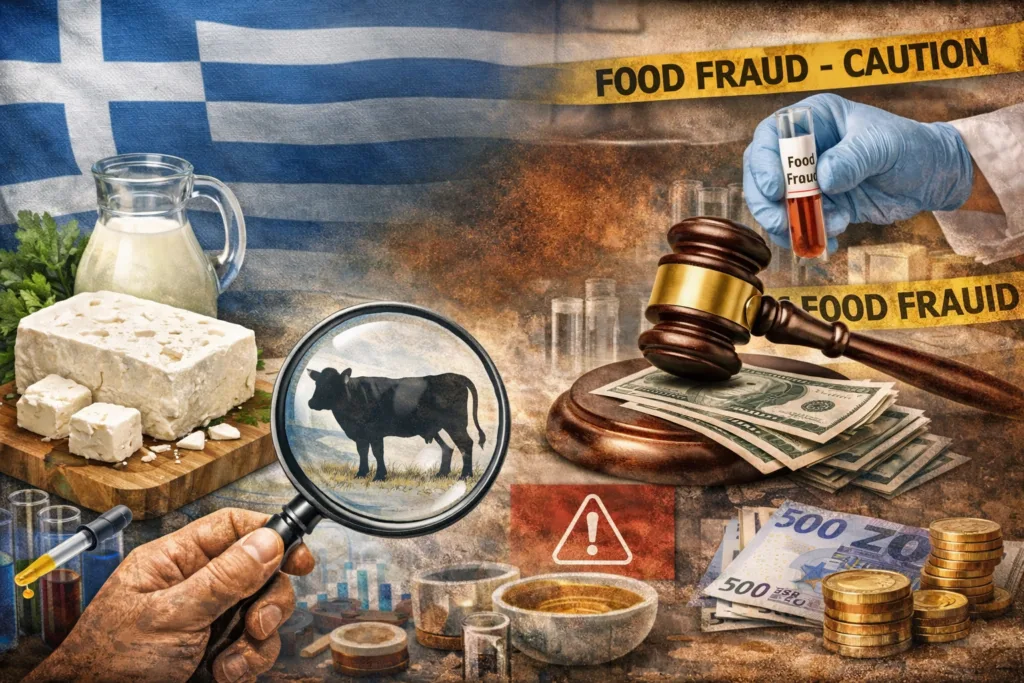
Ήταν αποτέλεσμα νοθείας ή αμέλειας τελικά η ανίχνευση ύπαρξης αγελαδινού γάλατος σε φέτα που διέθετε στη γερμανική αγορά μεγάλη Ελληνική εταιρεία; Μιλάμε δηλαδή για απάτη ή απλά για μία αστοχία στη παραγωγική διαδικασία; Η απάτη (όπως προκύπτει από τον αγγλικό όρο food fraud) και που ορθότερα αποδίδεται με τον όρο παραπλάνηση στα τρόφιμα συμβαίνει όταν οι “καταναλωτές εξαπατώνται για την ποιότητα και/ή το περιεχόμενο των τροφίμων που αγοράζουν”. Στον ίδιο γενικό όρο απάτη, συμπεριλαμβάνεται φυσικά και η νοθεία (food adulteraton), ο υποβιβασμός δηλαδή της ποιότητας ενός προϊόντος μέσω της ανάμειξής του με άλλο παρόμοιο αλλά κατώτερης ποιότητα. Φυσικά, όπως και με τις περισσότερες παράνομες ενέργειες, η απατή στα τρόφιμα έχει σχεδόν πάντα να να κάνει με οικονομικά κίνητρα. Η απάτη, πέραν από την επίπτωση στην εμπιστοσύνη των καταναλωτών στις βιομηχανίες αλλά και τους κρατικούς ελεγκτικούς φορείς, πολλές φορές δημιούργει σοβαρό ζήτημα για την ασφάλεια των τροφίμων. Η περίπτωση της προσθήκης μελαμίνης στο γάλα (για την αύξηση του ποσοστού του αζώτου) οδήγησε στο να αρρωστήσουν πάνω από 300.000 το 2018 είναι μια από τις πιο γνωστές περιπτώσεις, ενώ λιγότερες γνωστές είναι αυτές της νοθευμένου μελιού στην Αμερική (σκάνδαλο Honeygate) όπως και αυτή της προσθήκης ανιλίνης σε λάδι, που οδήγησε σε θάνατο πάνω από 300 Ισπανούς. Σε διεθνές επίπεδο μηχανισμοί, όπως το ευρωπαϊκό σύστημα R.A.S.F. αλλά και ο αμερικάνικος F.A.O. καταγράφουν καθημερινά νέες περιπτώσεις παραπλάνησης σε τρόφιμα. Από τον επισυναπτόμενο πρόσφατο οδηγό του F.A.O., ξεχωρίζουν περιπτώσεις όπως: Σύμφωνα με την Ευρωπαϊκή Επιτροπή, το κόστος της απάτης σε τρόφιμα για την παγκόσμια βιομηχανία τροφίμων είναι περίπου 30 δισεκατομμύρια ευρώ ετησίως.
Νέο ISO 23662:2021. vegetarian, vegan, Lacto-vegetarian και Ovo-vegeterian
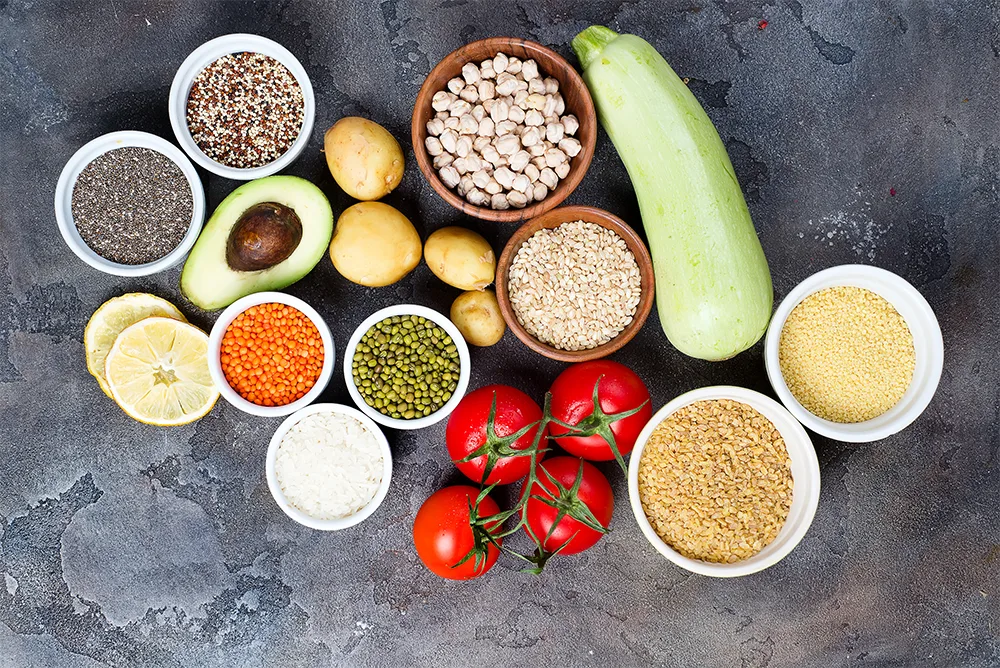
Τον μήνα που μας πέρασε η Τεχνική Επιτροπή Νο 34 της Ευρωπαϊκής Ένωσης, υπεύθυνη για θέματα τροφίμων, εξέδωσε το εξασέλιδο πρότυπο ISO 23662:2021. Στις 6 αυτές σελίδες δίνονται οι ορισμοί αλλά και τα τεχνικά χαρακτηριστικά των τροφίμων και των συστατικών τροφίμων που είναι κατάλληλα για τα 4 κύρια είδη χορτοφαγικής διατροφής. Συνοπτικά λοιπόν δίνονται οι τεχνικές απαιτήσεις για τρόφιμα/συστατικά τροφίμων για vegetarian (χορτοφαγική), vegan (αμιγώς χορτοφαγική), Lacto-vegetarian (Γαλακτο-χορτοφαγική) και Ovo-vegeterian (Αυγό-χορτοφαγική) διατροφή. Το πρότυπο δεν κάνει αναφορά σε αλλά θέματα όπως αυτά της περιβαλλοντικής διαχείρισης, της καλής μεταχείριση των ζώων, θέματα ασφάλειας τροφίμων ή προδιάγραφες των υλικών συσκευασίας, ενώ δεν γίνεται αναφορά ούτε σε άλλες λιγότερο γνωστές κατηγορίες όπως αυτές των Fruitarians, Pescetarians, Flexitarians κ.α. Αν και προς το παρών εθελοντική η επισήμανση των vegetarian και vegan προϊόντων, η ΕΕ υστέρα και από αρκετές πιέσεις διάφορων οργανώσεων καταναλωτών κάνει την αρχή στη θέσπιση του νομοθετικού πλαισίου, γύρω από αυτό που μέχρι πρότινος χαρακτηριζόταν σαν τάση μίας εξειδικευμένη μερίδας καταναλωτών. Καταναλωτικό κοινό που στην Ελλάδα αντιστοιχεί σε ένα μερίδιο στο χώρο του retail, λίγο πιο πάνω από το 2%.